Pharma Hub Insights
Stay updated with curated pharmaceutical industry insights, regulatory developments, emerging technologies, market trends, career opportunities, and professional perspectives from Ragupathy Renganathan. Designed to help students, professionals, and industry leaders stay informed in a rapidly evolving pharmaceutical landscape.
Curated by Ragupathy Renganathan · 18+ Years in Pharma · Practical Pharma Knowledge & Industry Insights
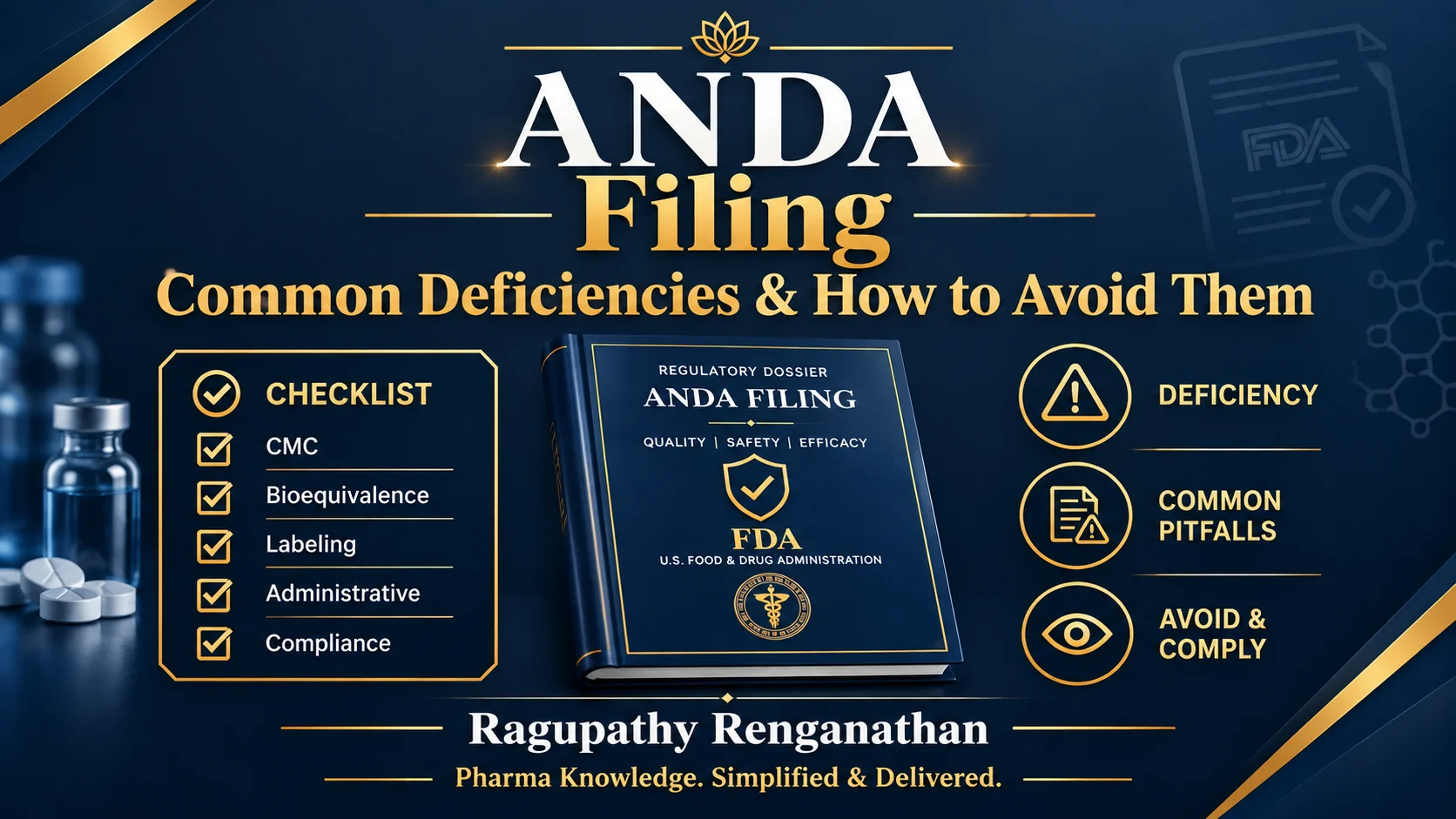
ANDA Filing: Common Deficiencies & How to Avoid Them A Practical Guide to Building a Complete, Review-Ready Abbreviated New Drug Application
A practical guide to the most common deficiencies in ANDA filings and how pharmaceutical companies can prevent them. Covers CMC, bioequivalence, dissolution, labeling, stability, documentation, data integrity, regulatory compliance, and FDA review expectations.
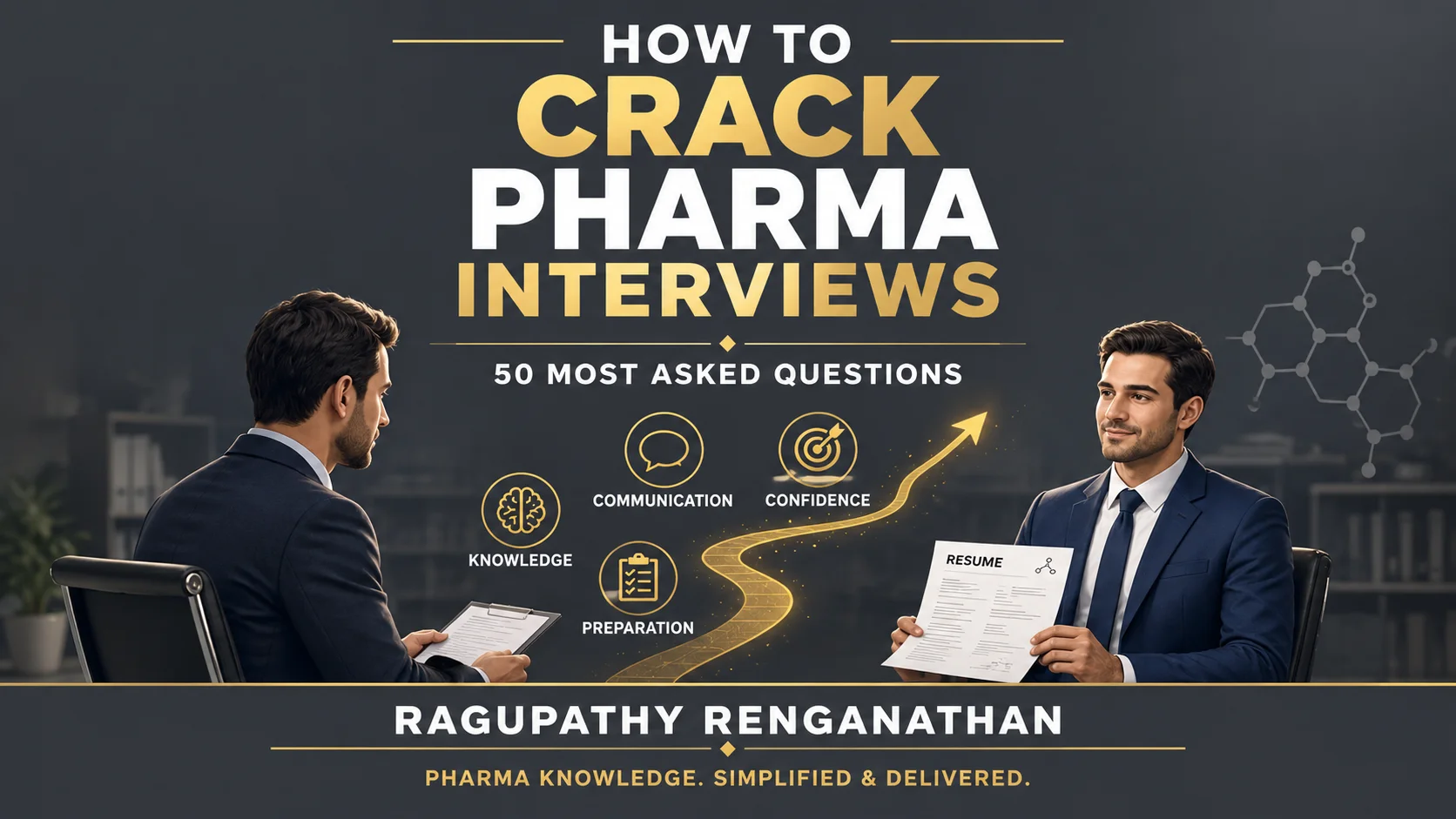
How to Crack Pharma Interviews: 50 Most Asked Questions & Professional Answers A Practical Interview Guide for Pharmacy Students, Freshers & Professionals
. How to Crack Pharma Interviews: 50 Most Asked Questions & Professional Answers A Practical Interview Guide for Pharmacy Students, Freshers & Professionals Introduction Pharmaceutical interviews evaluate much more than textbook knowledge. Interviewers commonly assess a candidate’s understanding of drug development, formulation, manufacturing, quality, regulatory requirements, pharmacology, pharmacovigilance, clinical research, and practical problem solving. They also look for clarity of communication, scientific reasoning, awareness of…
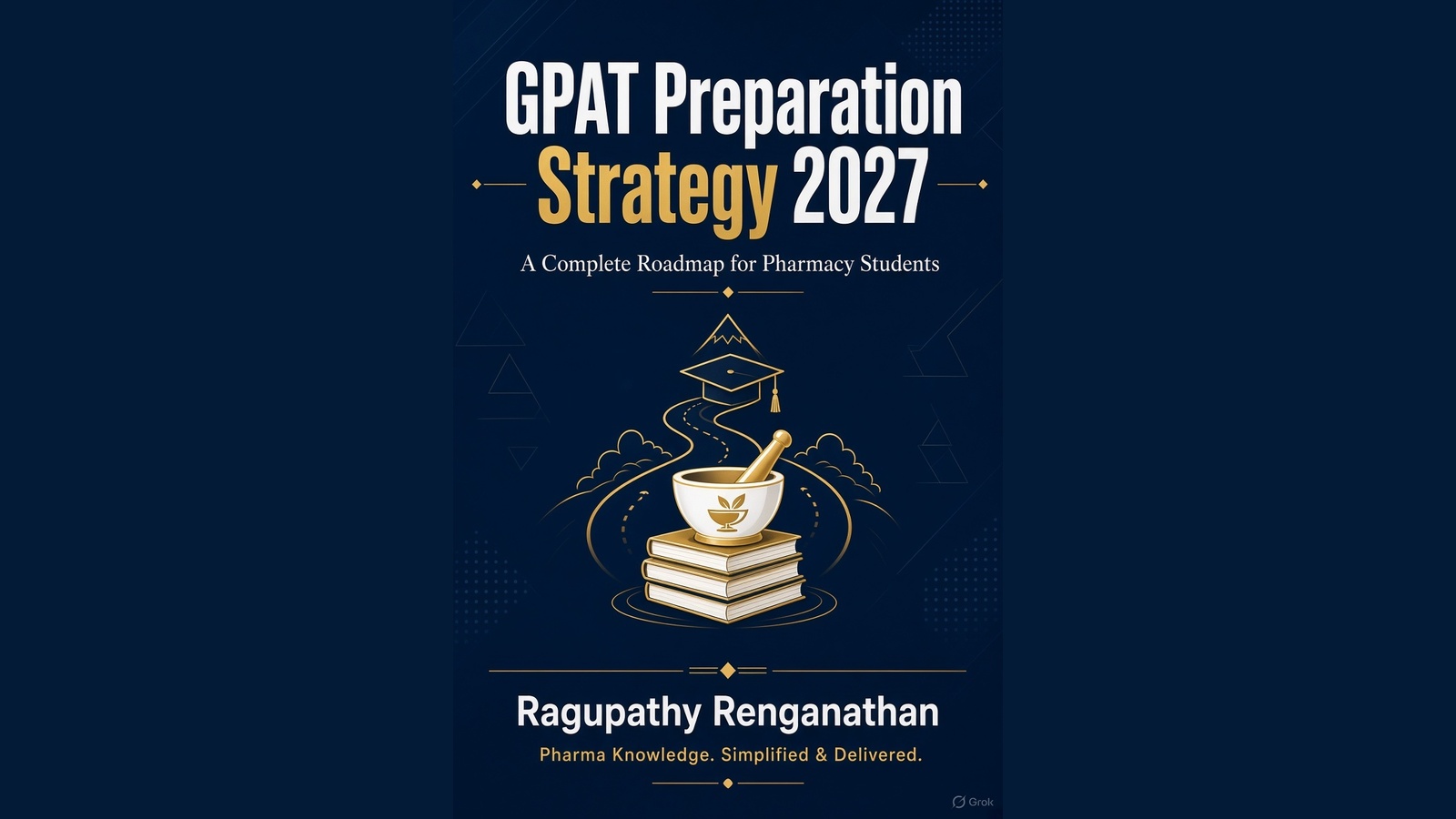
GPAT Preparation Strategy 2027: A Complete Roadmap for Pharmacy Students
Prepare for GPAT 2027 with a structured study plan covering the pharmacy syllabus, subject-wise preparation, effective revision techniques, previous-year questions, mock tests, time management and final-month exam strategies. Discover practical methods to strengthen pharmaceutical concepts, improve accuracy and build confidence for the GPAT examination.
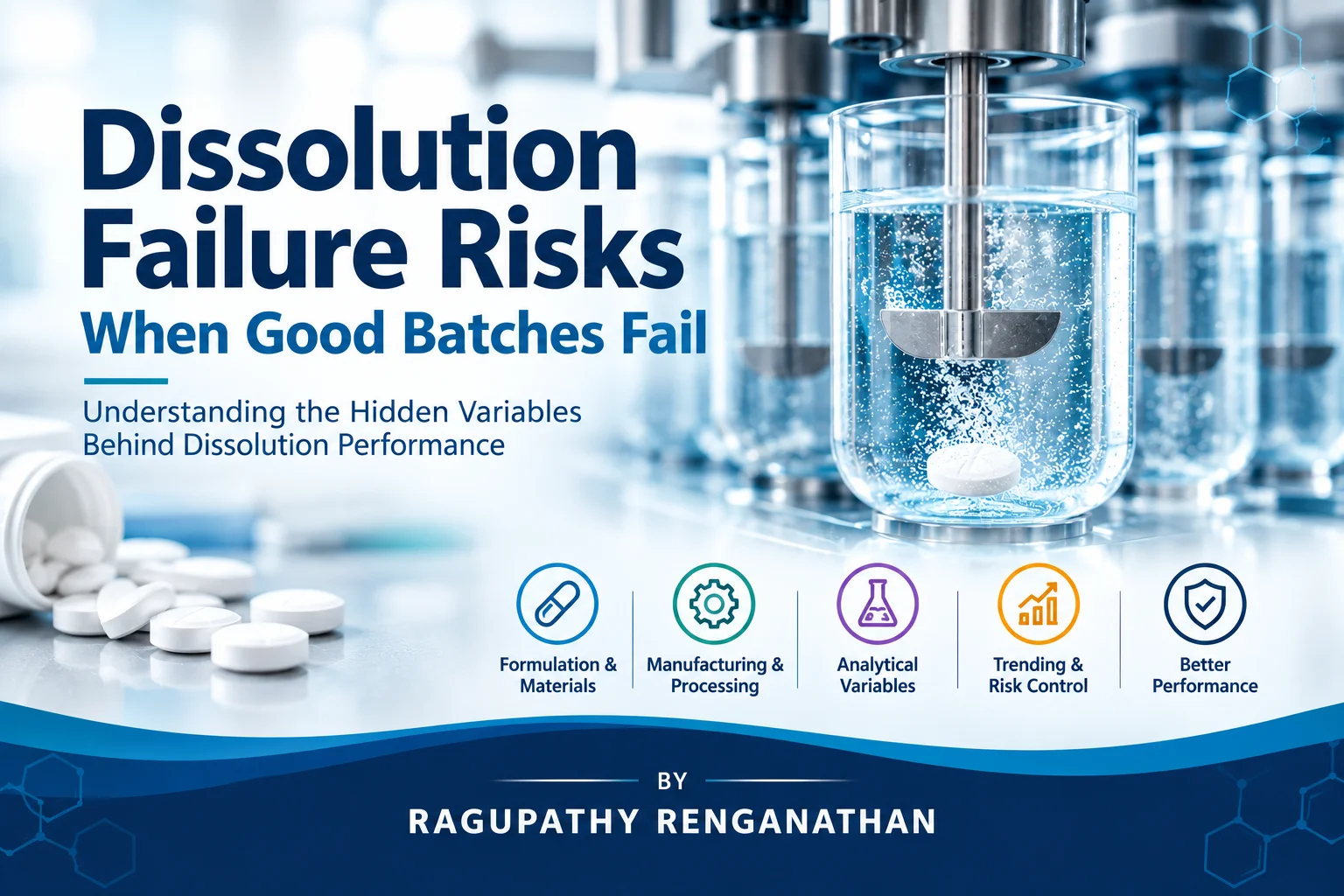
Dissolution Failure Risks — When Good Batches Fail
Dissolution Failure Risks — When Good Batches Fail explores the hidden formulation, material, manufacturing, analytical, and process variables that can cause an apparently compliant pharmaceutical batch to fail dissolution testing. The article examines API particle size, excipient variability, granulation, lubrication, compression, coating, dissolution media, apparatus conditions, sampling, analytical methodology, and process changes. It also explains how trending, Quality by Design, robust method development, and risk-based investigations can transform dissolution failures into opportunities to strengthen pharmaceutical quality and process performance. FDA guidance identifies dissolution testing as an important tool for evaluating drug-release performance, batch-to-batch consistency, and product quality.
The Future of Pharmacovigilance Protecting Patients Through Evidence.
The Future of Pharmacovigilance: Protecting Patients Through Evidence explores how pharmacovigilance is evolving from traditional adverse-event reporting into a proactive, technology-enabled discipline. The article examines drug safety, signal detection, real-world evidence, artificial intelligence, clinical expertise, and the growing role of pharmacovigilance professionals in protecting patients throughout the medicine lifecycle.
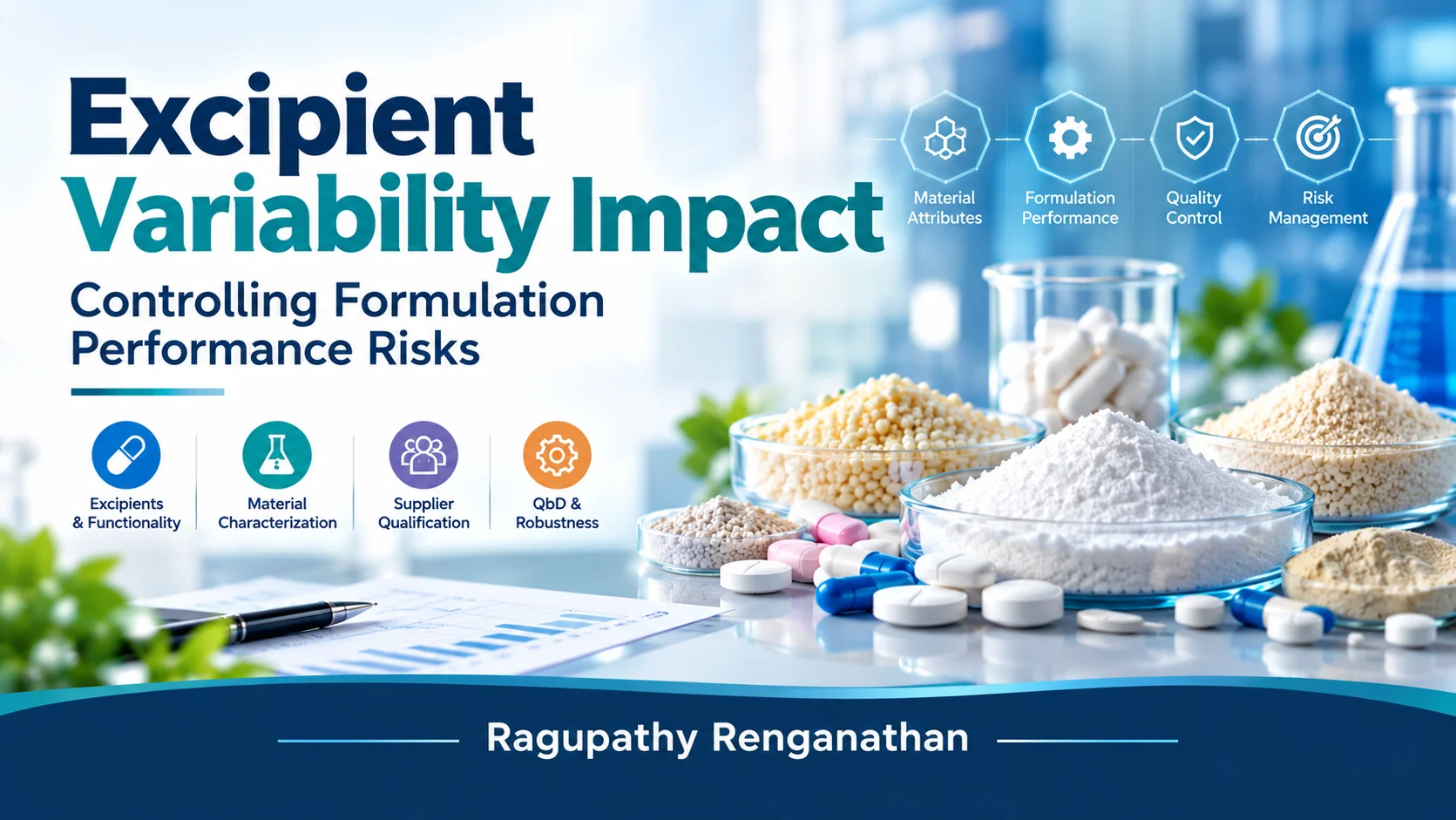
Excipient Variability Impact - Controlling Formulation Performance Risks
Excipient Variability Impact: Controlling Formulation Performance Risks explores how variations in excipient properties can influence pharmaceutical formulation quality, manufacturing performance, drug release, stability, and critical quality attributes. The article examines excipient functionality, material characterization, supplier variability, Quality by Design, risk-based controls, and strategies for developing more robust pharmaceutical formulations.

PHARMACEUTICAL MICROBIOLOGY - Study of Micro-organisms, Their Growth and Applications in Pharmacy
Pharmaceutical microbiology explores microorganisms, their growth, identification, control, and applications in pharmacy. This article explains microbial contamination, sterilization, aseptic processing, environmental monitoring, pharmaceutical water systems, microbiological testing, preservation, biotechnology applications, and the strategic role of microbiology in pharmaceutical quality, patient safety, regulatory compliance, and manufacturing excellence.
Clinical Trial Blinding
Clinical Trial Blinding explains how blinding reduces bias and strengthens the reliability of clinical research. This guide covers types of blinding, its importance in randomized clinical trials, practical challenges, ethical considerations, and its relevance to Pharm D students and clinical research professionals.
The AI-Driven Pharmaceutical Workforce: Which Pharma Jobs Will Change First?
AI is transforming pharmaceutical workflows across drug development, quality, regulatory affairs, pharmacovigilance, clinical research and manufacturing. Explore which pharma jobs are likely to change first and how professionals can build the scientific, digital and AI capabilities needed to remain valuable in the evolving pharmaceutical workforce.
Get Pharma Insights in your inbox
Free updates on regulatory developments, market trends, and professional perspectives.